Talent Gap Analysis
The Talent Gap Analysis 2.0, commissioned by OneSpartanburg, Inc. in partnership with Lightcast, is a comprehensive, skills-based analysis with strategy suggestions focused on four core sectors in Spartanburg County: manufacturing, transportation & warehousing, healthcare & social assistance, and hospitality.
The 2025 report builds on a study released in 2022 with deeper occupational workforce pipeline reviews, more on talent supply-demand dynamics, and strategic recommendations to boost Spartanburg County's continued economic competitiveness.


about the talent gap analysis 2.0
“The Talent Gap Analysis is a tool designed to help industry leaders, business representatives, and educators understand the background of talent demographic considerations, and the document on the whole reinforces work and initiatives outlined and supported by the OneSpartanburg Vision Plan 2.0. Our team is excited to dive in further with employers to begin strengthening our countywide talent ecosystem." - OneSpartanburg, Inc. Chief Talent Officer Ron Garner
Talent Gap Analysis 2.0 Use Cases
Sector: Health Care & Social Assistance
Target Occupation: Childcare Workers
Talent Pipeline: Upskill Feeder Occupation - Recreational protective services (i.e. lifeguards, ski patrol, etc.)
Use Case: Recreational services workers posses a high level of aligned skills with childcare workers, like CPR, supervision, organization, and more. This means a potential talent pipeline for childcare workers could include recreational services workers, as it would require minimal training in child development.
Sector: Manufacturing
Target Occupations: Assemblers and Fabricators, Electrical Assemblers, and Machine Setters (among others)
Talent Pipeline: Out-of-Market Talent Attraction Targeting Johnson City, TN
Use Case: Spartanburg is similar to Johnson City in that a large share of the labor shed has manufacturing occupations - which means a shared skill set also exists. The manufacturing sector in Johnson City is contracting slightly, and has an average pay that is less than the average in Spartanburg. Talent attraction efforts for the manufacturing industry targeted at Johnson City stand to be more successful by offering a similar cost-of-living, a higher average pay, and great quality of place enhancements.
Sector: Hospitality
Target Occupations: Bartenders, Dining Room Attendants, Head Cooks (among others)
Talent Pipeline: Establish work-based learning programs
Use Case: The Hospitality industry needs to adapt to rapid job growth and maintain quality talent. Many occupations require minimal education and short-term on-the-job training. These occupations are good candidates for a work-based learning (internship) pipeline. Establishing a formal WBL program can help recruit talent earlier and be adaptive the the part-time, hourly, gig-based, and/or flexible work environment already existing in Hospitality.
Sector: Transportation & Warehousing
Target Occupation: Heavy and Tractor-Trailer Drivers
Talent Pipeline: Maximize educational completions, earlier
Use Case: Truck drivers make up 32% of the labor force for the Transportation & Warehousing sector and have 23% of employees nearing retirement age (55-64), concerningly. With a timeline of 5-10 years before losing upwards from 800 drivers, this industry needs to focus now on maximizing graduations and expanding pertinent certifications (e.g. CDL). Doing so quickly can also help capture veteran talent's experience through training programs to emerging talent.
Key recommendations from the Vision Plan 2.0 (READ THE FULL PLAN HERE) contained within the Talent Gap Analysis 2.0 are:
- College Affordability: the report supports continued alignment of scholarship programs with labor-market needs, and reducing barriers to education while also fulfilling employer needs
- College & Career Connections: the report advocates for improved exposure to the labor market for K-12 students through work-based learning. The report also calls for a universal portal where high school and college students can connect with employers for internships and other WBL opportunities.
- Adult Degree Completions: the report outlines where talent gaps occur across critical occupations, which will further connect individuals restarting their college-degree journey through Re:Degree to career opportunities countywide.
- Talent Marketing & Attraction: the report outlines where supply gaps occur and how they can impact talent-attraction efforts. It also identifies markets with higher costs-of-living and lower salaries as target areas to attract talent from, by sector.
how the talent gap analysis can benefit you
OneSpartanburg, Inc. members and investors are eligible for a deep dive into the Talent Gap Analysis 2.0 with representatives from our team, who will provide guidance and more info on sector-specific talent concerns, best practices, and other key pieces of information designed to help your business make the best talent decisions.


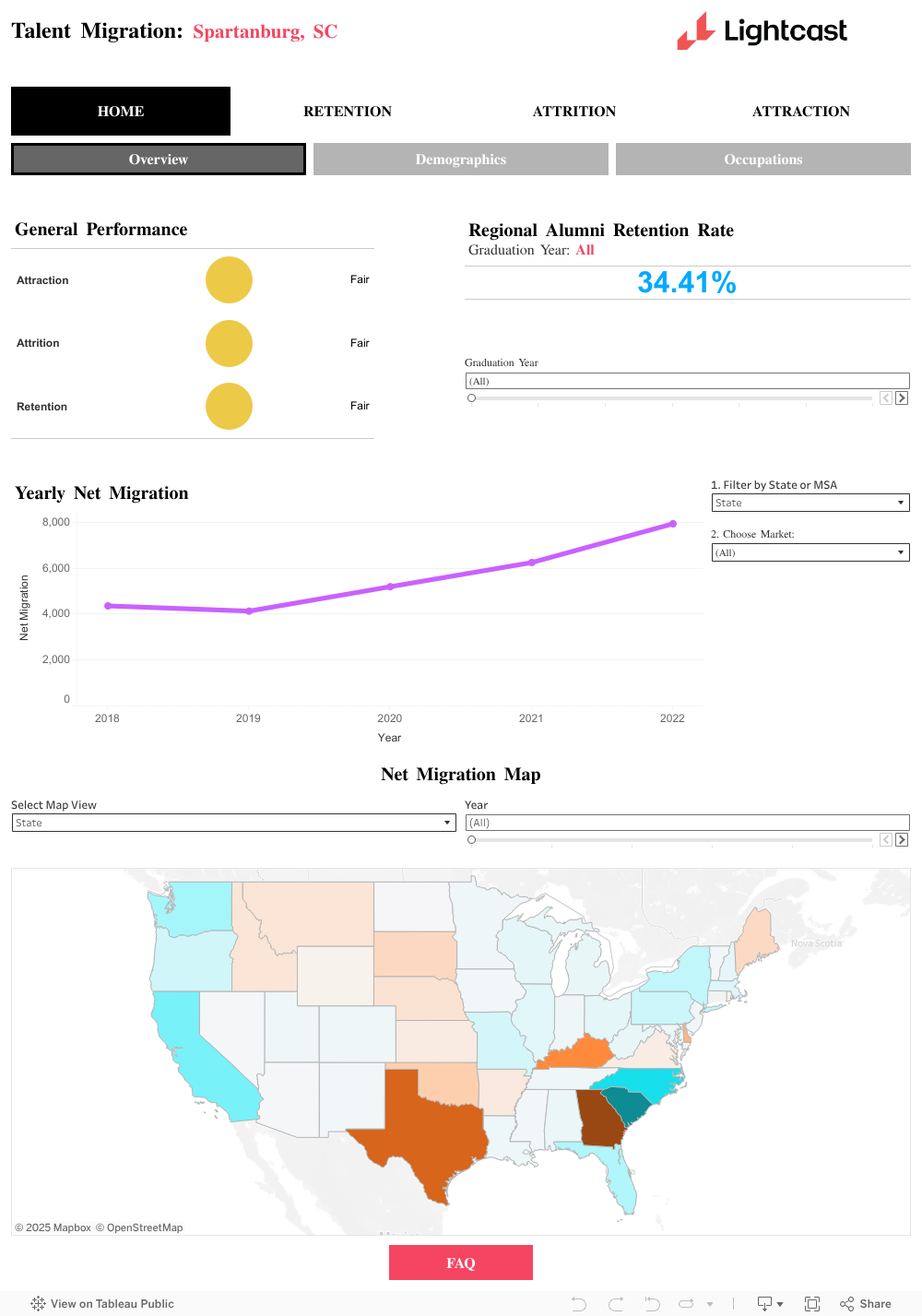
Explore Lightcast's Talent Migration Dashboard